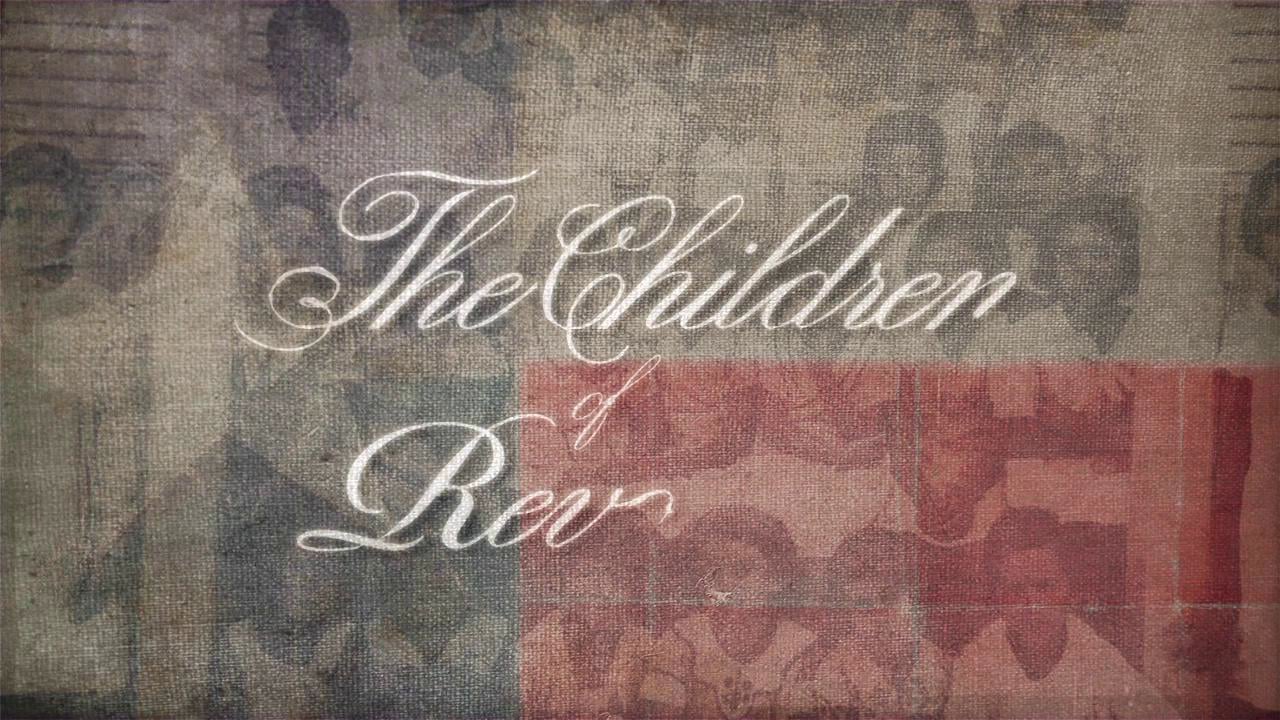
A documentary series that Preserved untold Stories

Children of the Revolución was originally produced as a public television documentary series that aired between 2010 and 2011 on PBS stations, including KLRN (San Antonio) and Houston PBS.

The series brought together personal testimonies from children, grandchildren, and descendants of families who fled Mexico during the Mexican Revolution, revealing how those experiences shaped identity, culture, and community across generations.

Today, the series stands as a historical and cultural record — documenting voices that helped form the social and cultural fabric of Mexican-American communities in the United States.

Episode I Dr. Ricardo Romo
PlayPlay
previous arrow
next arrow
Episode I Dr. Ricardo Romo
Ricardo Romo tells the story of his family fleeing from Rosita in the heat of the Mexican Revolution and the fear along the border of Los Rinches.
Episode II Henry and Elvira Cisneros
After receiving word that he was scheduled to be killed for using his newspaper to write against the government, Romulo preempted his assassination by fleeing to the United States.
Episode III Dr. Robert Treviño
Dr. Robert Treviño lost a great grandfather and a grandfather to the Mexican Revolution. Follow his story as he retells the role his family played in the saga of the Mexican Revolution.
Episode IV Charles Barrett
Mr. Barrett’s British great grandfather and grandfather go into Mexico following the construction of the railroads. Follow his story as his grandmother witnesses the execution of the Captain of the Port of Tampico.
Episode V The Power of Diversity
In a time when the United States was not friendly to Greek immigrants, Rose Catacalos' Greek grandfather married his Mexican bride who had fled the revolution to seek a safe future in the United States.
Episode VI Love in the Time of the Revolution & the Cristero Movement
Alex Briseno, San Antonio’s former City Manager and his sister, Lucille Briseno tell the story of a forbidden love between their Tejano father and their Mexicana mom who fled during the “Cristero” years of the Mexican Revolution.
Episode VII Revolutionary Women and the Adelitas
Patti Elizondo and Cecilia Herrera, both successful international women, tell the story of how the young women in their families were disguised as boys or as elderly women to avoid detection by revolutionary soldiers.
Episode VIII Anticipating a Revolution
Hortencia Gamez’s grandfather was a wealthy landowner in the northern of Mexico. He anticipated the revolution, sold everything and fled before the canons roared to keep his 6 sons from risking their lives in battle.
Episode IX The Revolution Timeline (Part 1)
Ricardo Danel, Lionel Sosa, Father Virgil Elizondo, Ted Terrazas, John Phillip Santos, Charles Barrett and Jennifer Speed outline the events leading up to the revolution and take us through a chronology that pauses at the assassination of Madero during the Deceda Tragica (the tragic decade) and the ascendency of Victoriano Huerta to the presidency.
Episode X The Revolution Timeline (Part 2)
David Romo, Jennifer Speed, Ricardo Danel, Henry Cisneros, Charles A. Gonzalez, Ron Pablos, and John Phillip Santos provide texture to the telling of the struggle that Mexico experienced during the turn of the 20th century.
Episode XI The Creation of US Leadership
An orphan comes to the United States during the Mexican Revolution. She grows up but doesn't receive an education. Perhaps she doesn't succeed at achieving the American Dream by today's standards but her daughter, Rosie Castro, breaks the cycle and raises two boys who graduate from Harvard and Stanford. One is the current mayor of San Antonio, the other a Texas Congressman.
Episode XII Women of Resilience
After losing her husband on the trek to the United States during the time of the revolution, Maria Hernandez Ferrier's grandmother is forced to put her children in an orphanage. She takes a job in the orphanage to get a glimpse of her children and proceeds to reinvent herself. Gebe Martinez’s grandmother became a midwife who would go on to deliver more than 1000 babies.
Episode XIII Learning to be American and Chicano
This episode highlight’s the story of Emma Tenayuca and how she witnessed the intellectuals and activists who fled Mexico during its revolution and who caused her to become a powerful orator for the people. Carmen Tafolla, Rosie Castro, Tómas Frausto, Lauro Garza and Jennifer Speed weave through these Mexican-American chapters of little-known American history.
Episode XIV Serving Our Country
Españoles, Tejanos, Mexicanos and Mexican-Americans have been defending the land north of the Rio Grande since before Texas was a Republic or part of the Union, before borders were formalized. This episode is a small tribute to the Latino war veterans who have defended America in all of its transmutations over the last several hundred years.
Episode XV The Mestizaje Story
Originally, Mexico was made up of separate regions and tribes, a mixture of many races, ethnicities and religious beliefs who originated from the Spanish/Moors and pre-Columbian nomads from Asia. The Mexican Revolution unified the country and created the Mexican psyche. Those who fled to the United States populated the West bringing with them a unique integration of spirit, talent, fortitude and hope.
Episode XVI A Commitment to Mi Tierra
The story of the Cortez family and their Mi Tierra restaurant is just not a story about Tex- Mex Cuisine. It is a story about how the Mexican revolution 100 years ago provided the ingredients that created the taste and style of the Mexican-American cultural movement. This episode highlights the similarities between Emiliano Zapata and Mi Tierra and how the revolutionary spirit would become the mantra for the Cortez family and their restaurant.
Episode XVII Education
It's not taught in schools but the history of the Mexican Revolution is the history of Texas too.
Episode XVIII Immigration – Then and Now
The US/Mexico border has been porous for hundreds of years. This episode takes a look at the debate and history of immigration policy, the ebb and flow of Mexican immigrants to this country and the many milestones that have shaped the United States since the border was drawn. Guests on this show include Neftali Garcia, Lee Terran, Lauro Garza, Henry Cisneros, Dan Guerrero, John Phillip Santos and David Romo.
Episode XIX Music Of The Revolution
The Mexican Revolution has shaped the sound of the Southwest in many ways. Pancho Villa loved his música so much that he stopped the shooting at 4 pm to celebrate with music. He even took requests from his enemies. From the legendary stortyelling corridos of Zapata to celebratory mariachi melodies to the modern-day Tejano Conjunto sound, the revolutionary music told stories of heroes, brave women and epic battles.
Episode XX The New Revolution 100 Years Later
This episode is about the grim reality that our neighbor Mexico is facing. Like 100 years ago, those with financial means and know-how are coming to America to escape the violence and forge a new life, leaving their homeland behind. Tonight, Children of the Revolución guests like Neftalí Garcia and Charlie Gonzalez look critically and soberly at the homeland of their ancestors and hope for a new day.
previous arrow
next arrow

The Concept

Rather than presenting history through dates and battles, Children of the Revolución focused on personal memory.

Each episode explored:
• Family migration stories
• The emotional cost of displacement
• The process of becoming American while preserving cultural roots
• The resilience of families navigating two worlds

By centering individual voices, the series revealed a broader truth:
history lives most powerfully through lived experience.

Voices Featured in the Series

The documentary series featured prominent Latino leaders, scholars, artists, and community voices, including:

  • Henry Cisneros
  • Ricardo Romo
  • Julián Castro
  • John Phillip Santos
  • Virgil Elizondo
  • Charles Barrett
  • Alex Briseño
  • And many others

Their stories were not presented as public figures, but as sons, daughters, grandchildren, and descendants — sharing family histories shaped by revolution and migration.

Episodes & Themes

(Historical Archive)

The original broadcast included episodes organized around key themes such as:

  • Migration and displacement
  • Revolutionary women and the Adelitas
  • Love, family, and survival during conflict
  • Cultural identity and belonging
  • Service, leadership, and civic contribution
  • The long-term impact of the Revolution on American society

These episodes now form part of the project’s archival collection, preserved as a reference for education, research, and cultural memory.

Original Broadcast History

Children of the Revolución originally aired on public television between September 2010 and May 2011, reaching audiences across South Texas and beyond.

While the series is no longer in active broadcast, its impact continues through:

  • Educational use
  • Community screenings
  • The companion book
  • Ongoing cultural conversations


Recognition & Awards

The documentary series received national and international recognition for its contribution to cultural preservation and storytelling, including:

  • Emmy Award
  • Cannes Corporate Media & TV Awards
  • New York Film Festival
  • Telly Awards

These honors reflect the series’ significance as both a documentary work and a cultural contribution.

The Show Today

More than a decade after its original release, Children of the Revolución remains relevant.

The stories captured in the series continue to resonate as new generations seek to understand:

  • Where they come from
  • How history shapes identity
  • Why memory matters

The show now lives on as a documentary archive — preserved, accessible, and meaningful well beyond its original moment in time.

The series may have ended, but the stories it captured continue to speak.

Stories

Voices that history never recorded

Read personal stories, letters, and memories shared by families whose lives were shaped by the Revolution.

The Film

The award-winning documentary

Discover the film that brought these stories to public television and international recognition.

The Book

A tangible piece of history

Explore the book inspired by the documentary—a visual and historical record designed to endure.

Recognized by international festivals and institutions, Children of the Revolución has been honored for its contribution to cultural preservation and historical storytelling.